What Happens on a Discovery Flight? First-Timer's Guide
The headset goes on, the airport comes alive around you, and the controls stop looking like something from a movie. A discovery flight is an instructor-guided introduction to the aircraft, the airport, and the feel of flying. It is designed to let you experience aviation before deciding whether pilot training belongs in your future.
At Ideal Aviation, your visit typically includes a conversation with an instructor, an introduction to the aircraft, time in the cockpit, and a postflight chance to ask questions. The exact sequence and airborne experience can vary with the aircraft, weather, traffic, and your instructor’s judgment.
Your Flight Starts Before the Engine Does
The first thing is to meet your instructor, talk through the plan, and get comfortable asking questions. Tell us whether you are exploring a lifelong dream, considering a career, or simply curious about what flying feels like.
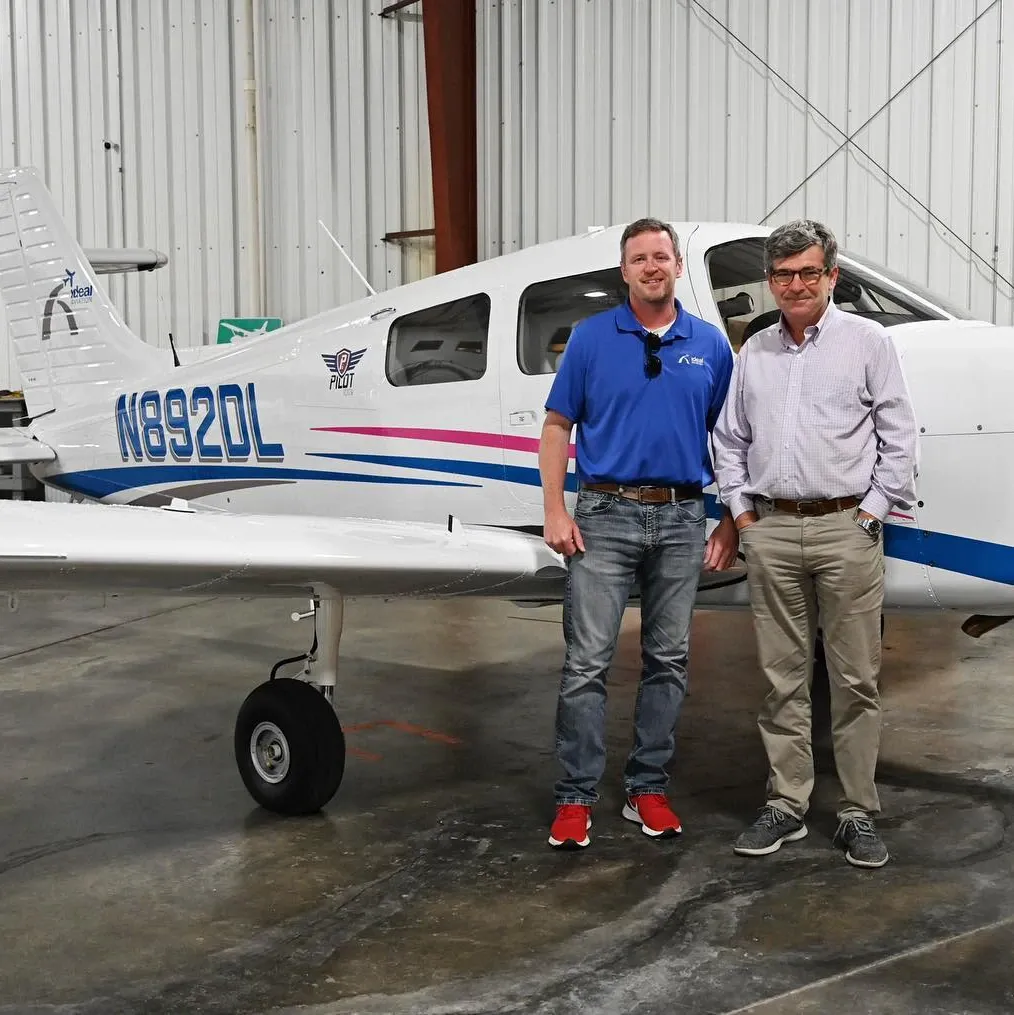
Before departure, your instructor will typically introduce the aircraft and explain the checks used to prepare for flight. During a walkaround, you may see how pilots look at items such as the tires, control surfaces, fuel, and the aircraft’s overall condition. The goal is to show you that flying begins with deliberate preparation.
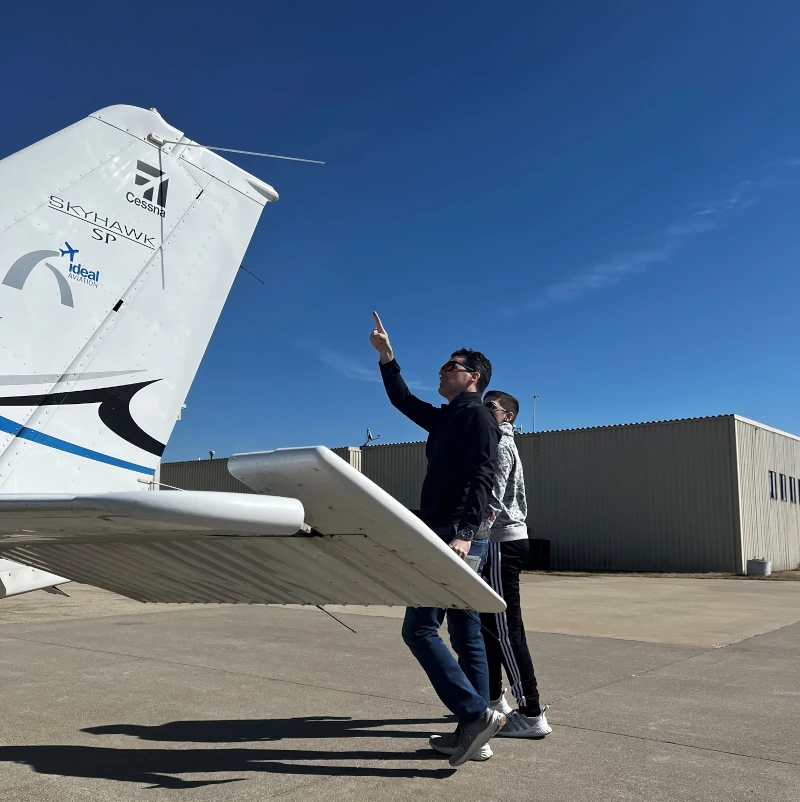
A preflight walkaround introduces the careful habits that begin every training flight.
If you are deciding between aircraft types, Ideal Aviation offers both airplane and helicopter training programs. You can indicate airplanes, helicopters, or both when you submit your discovery-flight request.
The Cockpit Becomes Less Mysterious
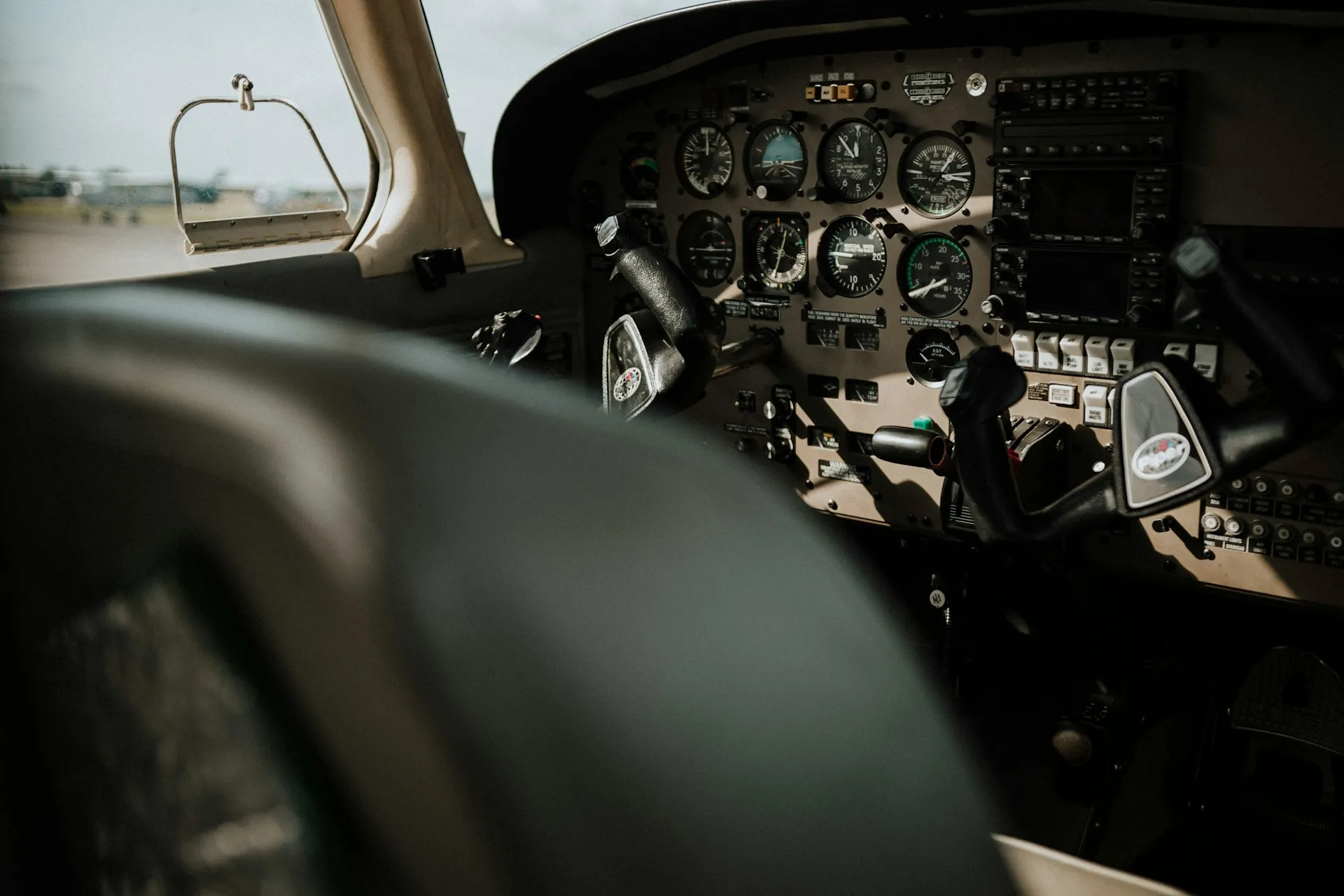
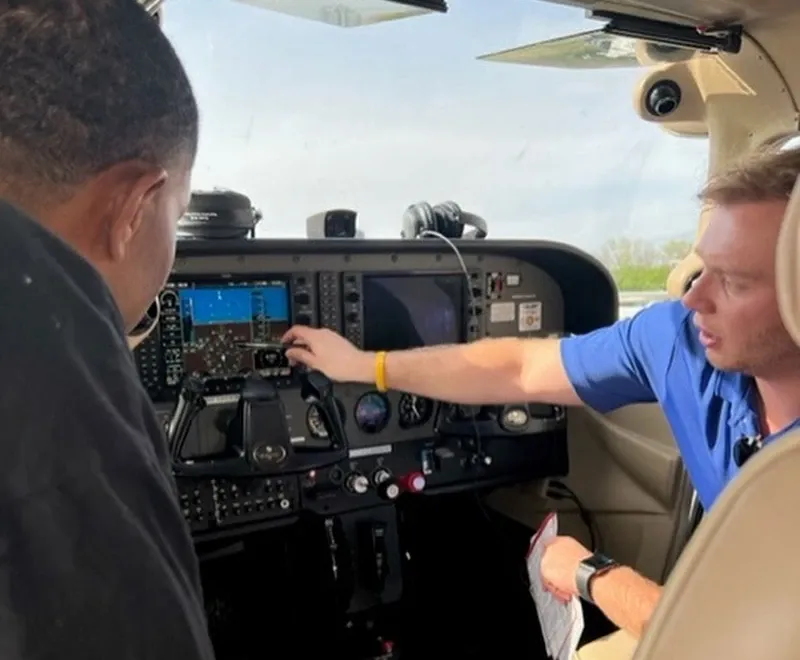
Once you are seated, your instructor will help you get situated and introduce the controls and instruments that matter for the flight. You may learn what the control yoke or cyclic does, how pedals affect the aircraft, what a few primary instruments display, and how the headset lets you hear cockpit and radio communication.
There is no expectation that you arrive knowing aviation vocabulary. This is your chance to connect the explanation to the real machine in front of you. If an instrument, sound, or procedure catches your attention, ask about it. That curiosity is part of the experience.
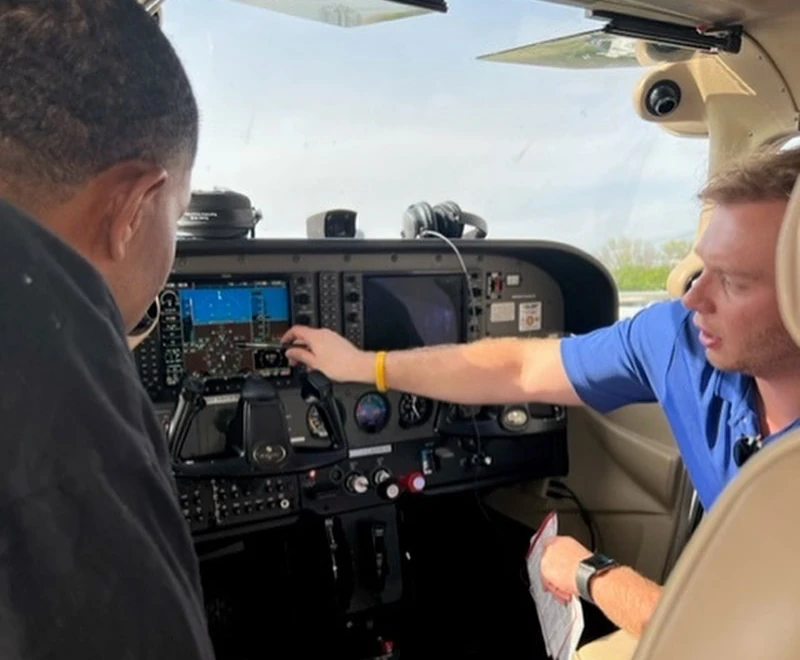
An instructor introduces the cockpit and keeps the first experience focused and approachable.
Readers who want a head start can explore what students learn in their first few hours of flight training, but no studying is required before a discovery flight.
You May Get to Feel the Aircraft Respond
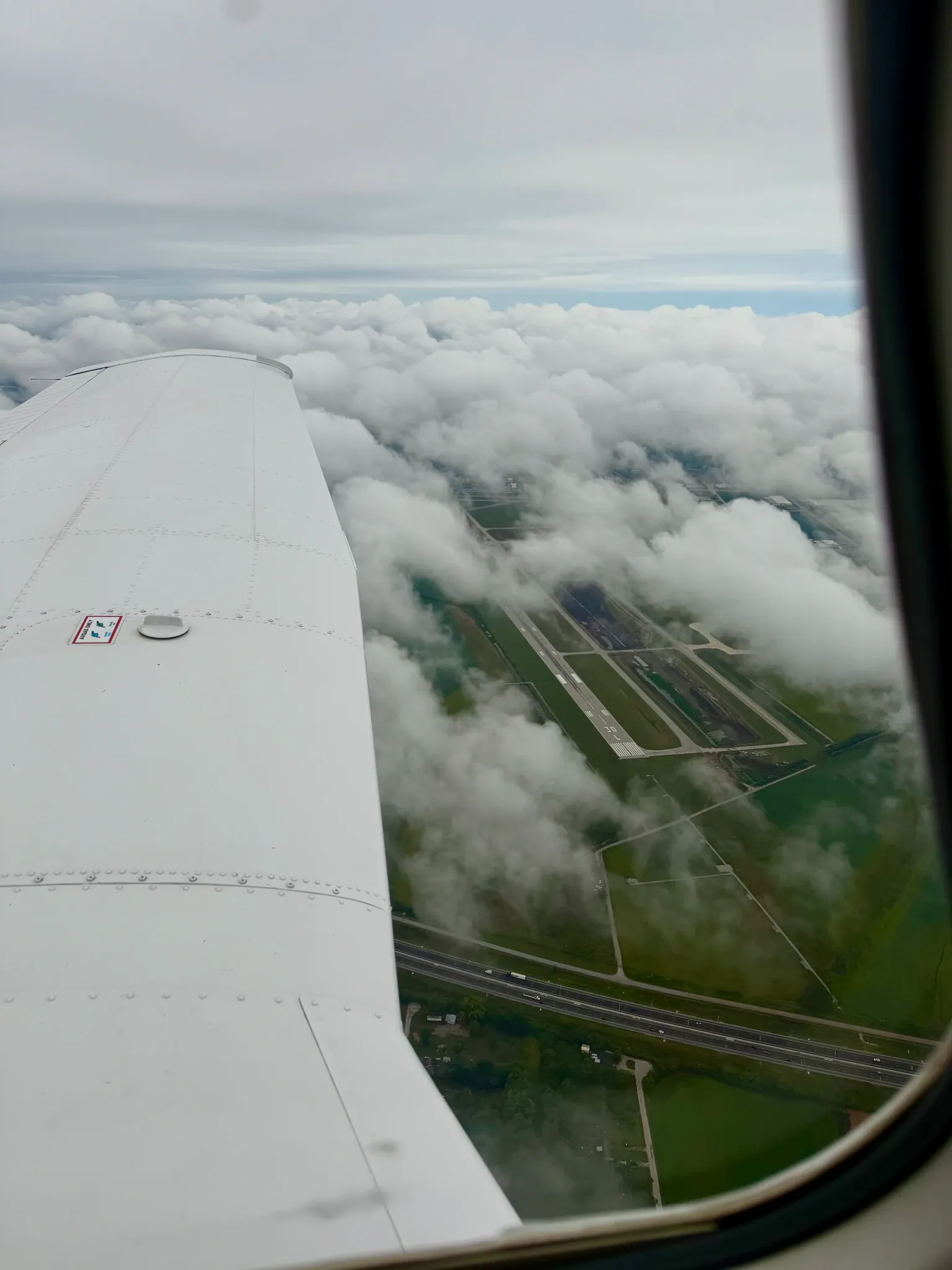
After the aircraft is ready, your instructor handles the flight and guides each phase of the experience. Taxiing gives you a close-up look at airport movement, signs, markings, and radio coordination. Then the view changes quickly as the runway falls behind.
When conditions and the instructor allow, you may get to make gentle control inputs or follow along on the controls. This is usually where the idea of flying becomes real: a small movement produces a clear response, and the instructor helps you understand what the aircraft is doing.
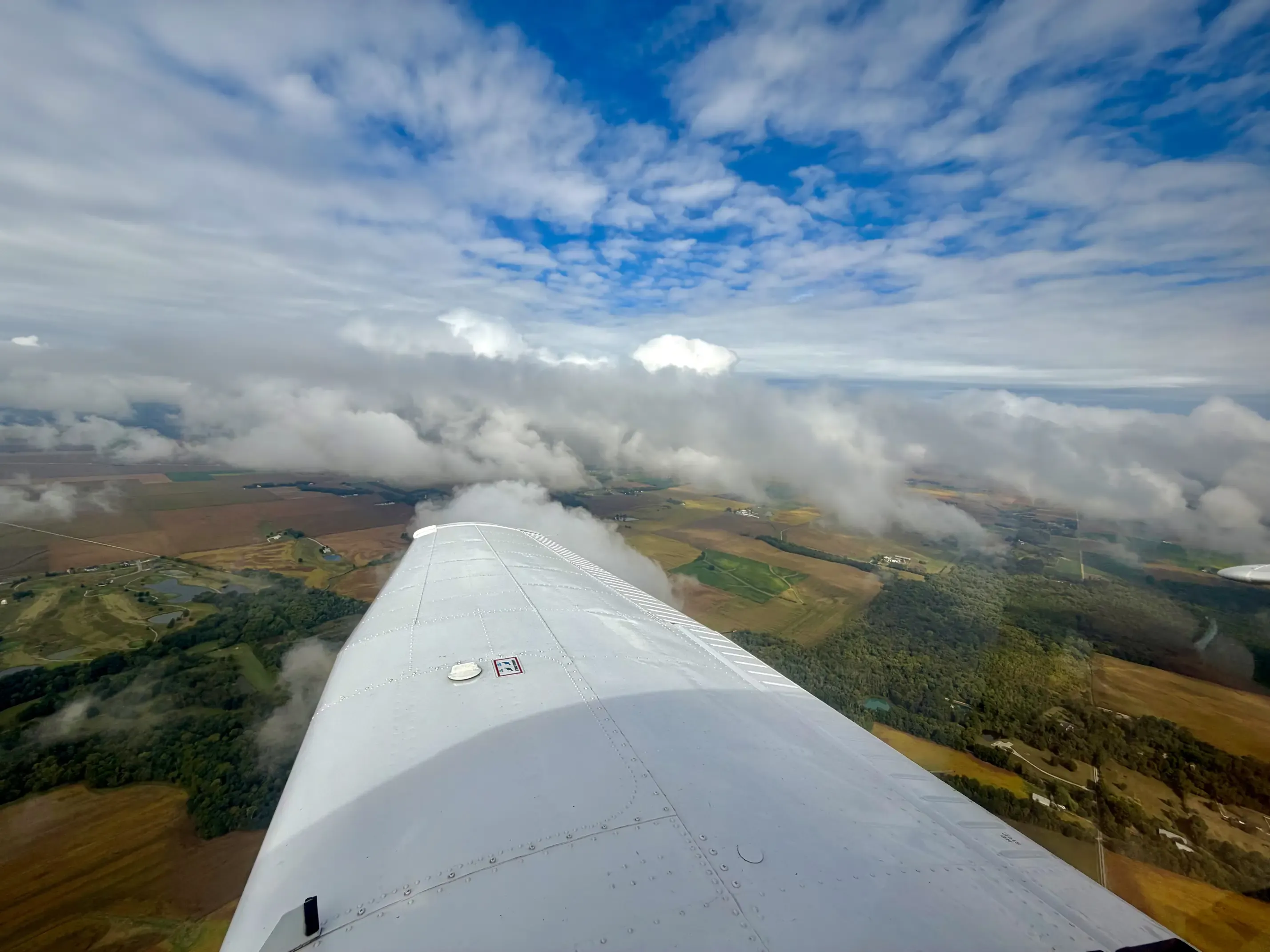
The exact route and maneuvers are not fixed. Weather, air traffic, aircraft availability, and operational decisions all shape the flight. Depending on the route and conditions, you may also see familiar parts of the St. Louis area from an entirely new angle.

Discovery flights with Ideal Aviation depart from St. Louis Downtown Airport in Sauget, Illinois.
You can learn more about the training environment through our fixed-wing fleet and rotary-wing fleet pages.
The Most Useful Part May Happen After Landing
Once you are back on the ground, take a moment to notice your reaction. Were you eager to understand every instrument? Did the physical feel of the controls surprise you? Could you picture yourself returning for a lesson?
Your postflight conversation is a good time to ask what a realistic next step would look like. We can help you compare a Private Pilot program with helicopter pilot training, discuss how lessons fit around your schedule, and explain how training can progress beyond the first certificate.
You do not have to commit to a full program that day. A discovery flight is valuable precisely because it replaces guesswork with a real experience.
A Little Preparation Makes the Day Easier
You do not need special aviation gear or prior knowledge. A few simple choices can help you stay focused on the flight:
- Wear comfortable clothing and practical shoes that let you move easily around the aircraft.
- Eat normally and stay hydrated rather than arriving on an empty stomach.
- Bring sunglasses if the day is bright.
- Share any concerns before departure, including motion sensitivity or nervousness.
- Bring your questions about aircraft, training schedules, costs, and the path that interests you.
If your discovery flight turns into a training goal, budget planning should include more than one introductory visit. Training costs vary, and current financing resources or scholarships may depend on eligibility and program details. Our aviation scholarship resources can help you begin that conversation.
Discovery Flight FAQs
Do I need any flying experience?
No prior flying experience is expected. A discovery flight is built for beginners, and our first-time pilot resources can help you understand what comes next.
Will I actually fly the aircraft?
You may be invited to make gentle control inputs under your instructor’s guidance. The instructor remains responsible for the flight, and the amount of hands-on participation depends on the aircraft, conditions, and instructor judgment. Learn more about the larger training path on our programs page.
Can I choose an airplane or a helicopter?
Yes. The Ideal Aviation discovery-flight request lets you indicate airplanes, helicopters, or both as your area of interest. Our team will then talk with you about the current options.
Is submitting the form the same as booking?
No. The online form sends us your preferred date and time, but your flight is not on the schedule until an Ideal Aviation team member confirms it with you. Start with the request form, and we will follow up.
What if weather changes the plan?
Aviation plans must account for current weather and operating conditions. If conditions affect your flight, our team will communicate with you about the schedule. You can use the contact page for current questions.
Is a discovery flight only for future career pilots?
Not at all. Some people want to fly recreationally, some are exploring a career, and others simply want to experience the cockpit. If career or college-linked training is your goal, our SWIC partnership is another path to explore after your first flight.
Put Your Curiosity in the Pilot’s Seat
Reading about flying can answer many questions, but it cannot reproduce the moment the aircraft responds to a control input and the horizon opens in front of you. A discovery flight gives you a real reference point for your decision.
Request your discovery flight with Ideal Aviation and tell us whether you are interested in airplanes, helicopters, or both. After you submit your preferred date and time, our team will contact you to confirm the schedule.