Earn a Degree While You Learn to Fly: The SWIC Partnership
Picture the conversation at the kitchen table. You want to fly for a living. A parent wants to know what happens to the money if aviation does not work out, and whether you will have a degree to show for it. Both of you are asking a fair question, and the answer at Ideal Aviation is a partnership that puts flight training and college credit on the same transcript.
Through our partnership with Southwestern Illinois College (SWIC), your flight and ground training count toward an Associate in Applied Science in Aviation Pilot Training. You train with us at St. Louis Downtown Airport, you earn ratings the same way every other student does, and the college credit accumulates alongside your logbook. This guide explains how the mechanism works, what a week looks like, and the decisions you and your family should talk through before enrolling.
What college credit for flight training actually means
In a standalone flight school, your training produces FAA certificates and ratings and nothing else. In the SWIC partnership, the same flight lessons and ground instruction are recorded as college coursework. Your private pilot training, your instrument training, and the stages beyond appear as credit hours on a SWIC transcript while you work toward the FAA certificates.
For a student, that changes what a hard year produces. If you decide after private pilot that aviation is a hobby rather than a career, the credits still exist and carry into another degree. That turns “flying lessons” into “completing a degree that includes flying lessons,” which is a different conversation with a lender or a family budget.
Fluid enrollment: why you do not wait for a semester to keep flying
Traditional college aviation programs run on the academic calendar. Finish the private pilot course in October and you wait until January to start instrument. Flight skills do not wait well. Every month away from the airplane costs proficiency you then pay to rebuild.
SWIC’s program uses fluid enrollment. When you are ready for the next phase of training, you move into it without waiting for a new semester to begin. You progress at the pace of your skills and your schedule, which is the same rhythm we recommend to every student in our Private Pilot program whether they are in the degree track or not. For a working adult or a student with a part-time job, that flexibility is often the difference between finishing and stalling.
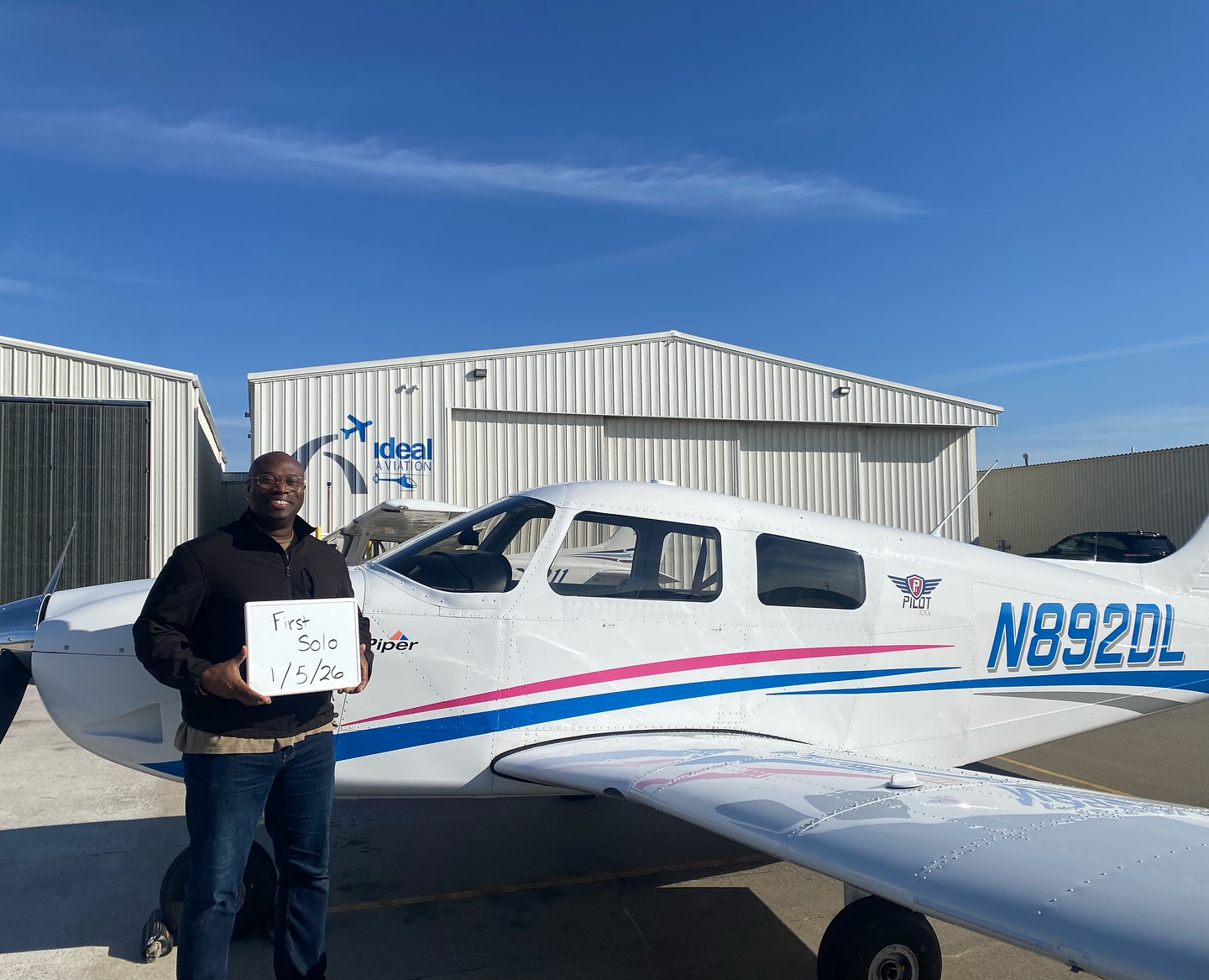
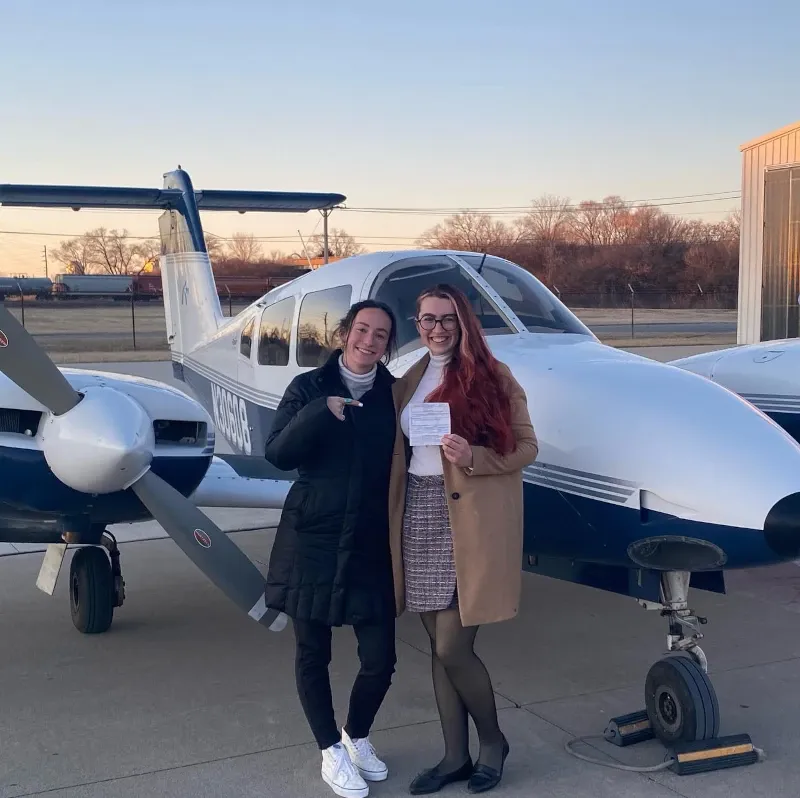
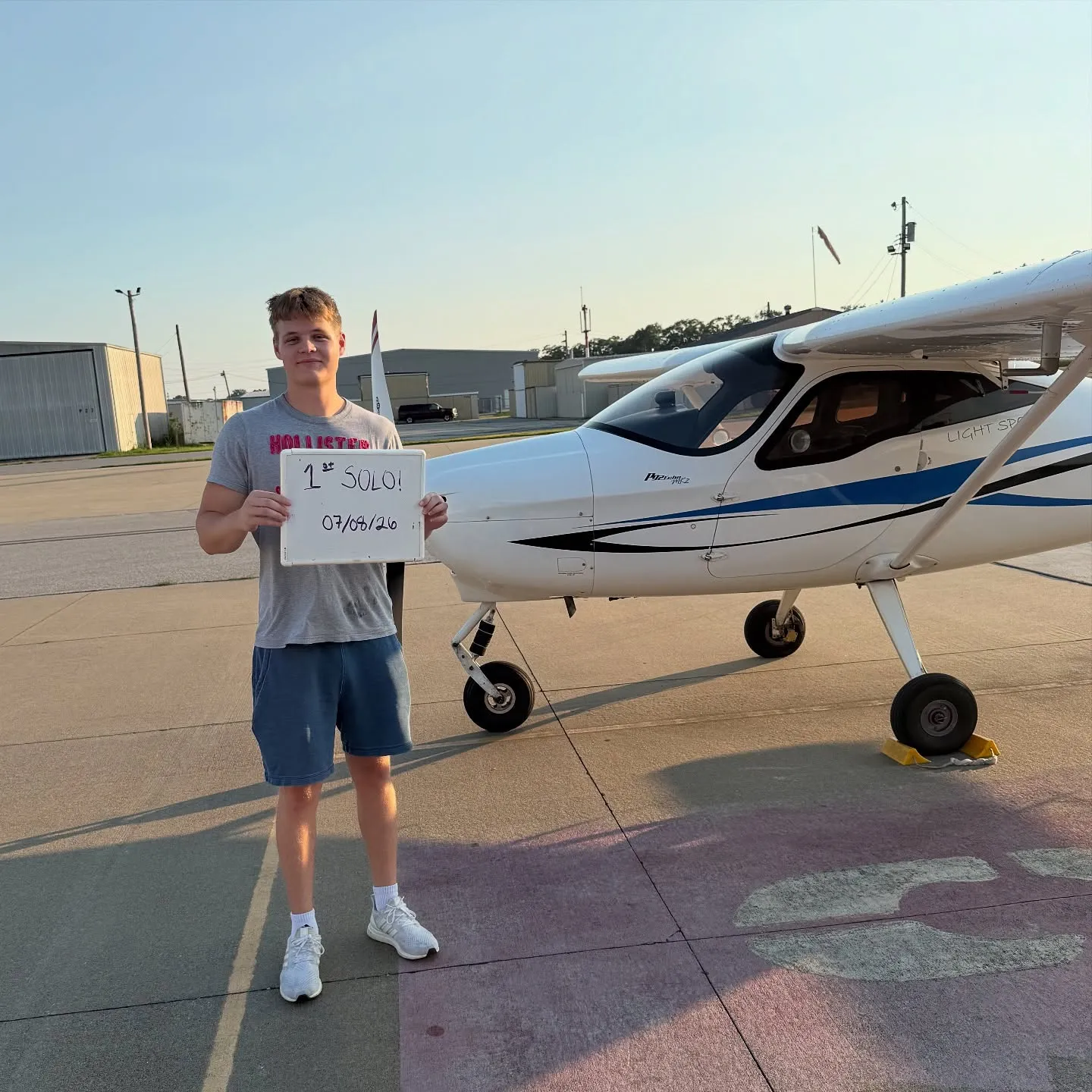
A first solo is a milestone in both the logbook and the degree plan.
The degree path: an associate degree first, then a transfer option to SIU Carbondale
The associate degree is the first credential. Once you finish it, there is a direct transfer option to Southern Illinois University Carbondale to continue toward a bachelor’s degree, so the credits you earned while flying keep moving forward instead of stopping at two years. SWIC and SIUC own the degree requirements and transfer rules, and we will point you to the right advisor for the current catalog.
Why does the four-year option matter? Many major airlines look favorably on a bachelor’s degree when they hire, and hiring standards belong to each airline. Having a clear path from associate degree to bachelor’s degree keeps that door open without forcing you to choose between finishing college and finishing your ratings. Students who want to see the full certificate sequence first can review our career-changer training plan for the order most professional pilots follow.
A week in the life: SWIC classroom, Sauget ramp
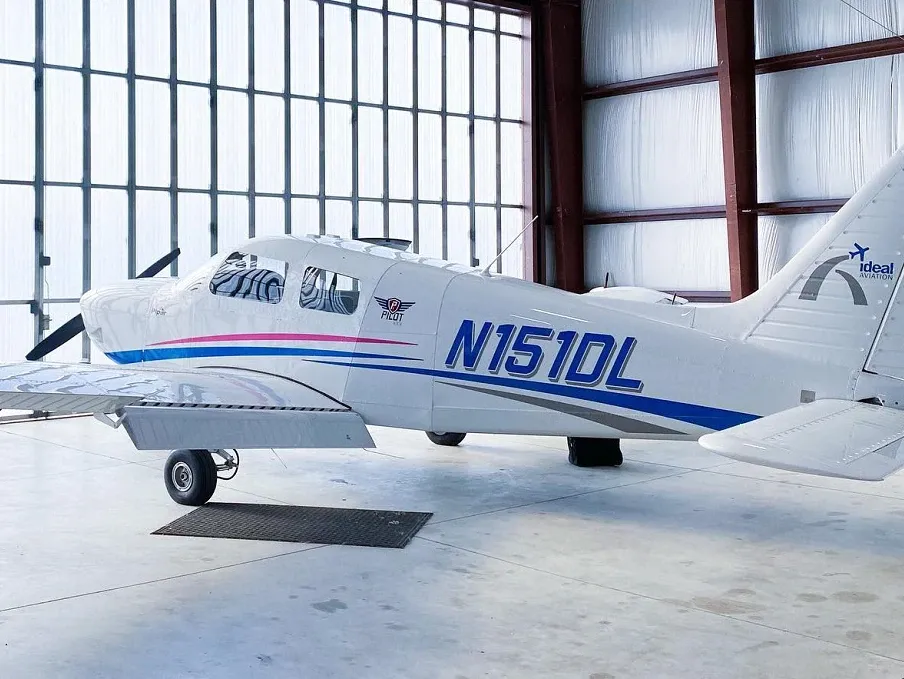
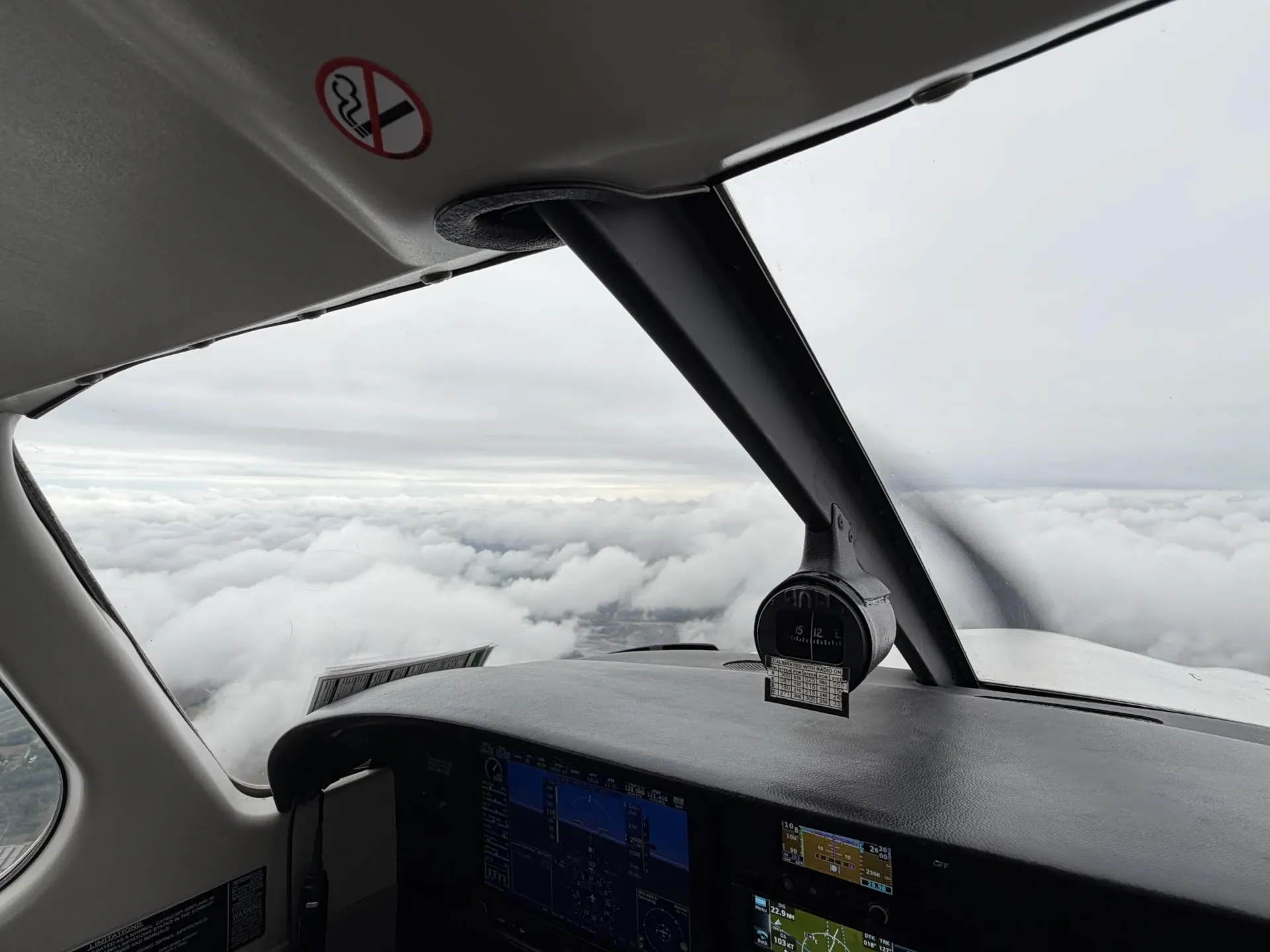
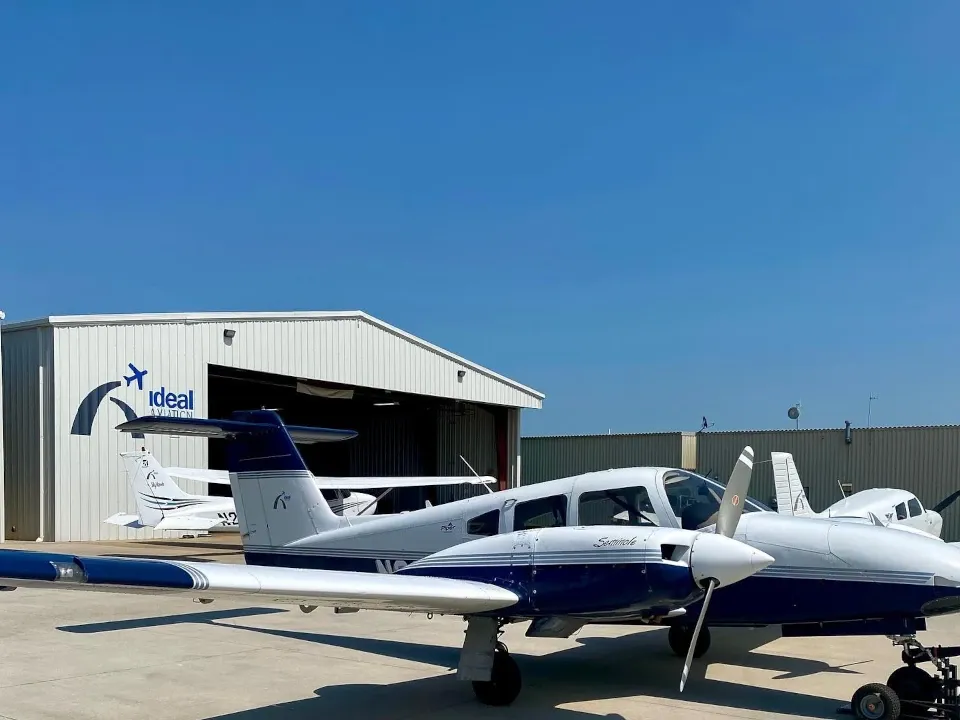
Here is the texture of it. On a Tuesday morning you are in a classroom at SWIC in Belleville working through aviation coursework. By early afternoon you have driven roughly twenty minutes to St. Louis Downtown Airport, where your instructor is waiting beside a Piper with a Garmin G3X panel for a lesson on steep turns and ground reference maneuvers. The two halves of the day count toward the same degree.
Later in the week you spend an hour in our Redbird simulator flying instrument procedures on a day the weather would have canceled the airplane. Weekend mornings are for solo practice once you are endorsed. Consistency is the skill this schedule builds, and it is the one our instructors care about most. You can read how our Part 61 and Part 141 options shape that rhythm.
What your training looks like inside a Part 141 course
The SWIC path runs through our Part 141 training, which follows FAA-approved course curricula with a structured syllabus, required records, and stage checks along the way. For a degree program, that structure is the point: a college needs a defined course of study, and Part 141 provides one.
| Stage | What it adds to your skill set | Why it belongs in the plan |
|---|---|---|
| Private Pilot | Aircraft control, navigation, weather judgment, radio work, and solo cross-country flying | Every path starts here |
| Instrument Rating | Flying by reference to instruments, approaches, and procedural discipline | Required for most professional flying |
| Commercial Pilot | Precision maneuvers, long cross-country planning, and the certificate to fly for hire | The certificate that lets you fly for hire |
| Multi-Engine Rating | Twin-engine systems and engine-out procedures in our Piper Seminole | Common for airline-track students |
| Certified Flight Instructor | Teaching, mentoring, and the most common way to build hours after commercial | The most common way graduates build hours |
Stage checks matter more than they sound. Each one is a rehearsal for the real checkride, flown with a different instructor who evaluates you against the same standards the examiner will use. Students who arrive at the practical test having already passed several stage checks tend to treat it as one more flight.
What a student says about the partnership
We can describe the mechanism all day, but a student in the program says it better. Isabela Jung, a student pilot that enrolled in both SWIC and our Part 141 program shares her experience.
This collaboration is vital. It uniquely combines SWIC’s rigorous academics with Ideal Aviation’s structured, FAA-approved curriculum, allowing students like me to earn an Associate’s Degree and Commercial Pilot Certificate efficiently and cost-effectively.
From personal experience, the program is excellent, featuring professional instructors and modern aircraft, which minimizes delays and ensures predictable progress. The combined institutions cultivate well-rounded professionals, not just license-holders.
- Isabela Jung, student pilot
You can read more from our students on the student success page. The phrase worth underlining is “predictable progress,” because that is what a family is really buying when it invests in flight training.
Paying for it: financing, scholarships, and the questions to bring
Flight training is a major investment, and enrolling through a college changes some of the funding conversation. Financing options may be available to qualified applicants, and enrolling through SWIC can open additional college financial aid and scholarship pathways; review the current terms with SWIC’s financial aid office and with us before you count on any of them. Our scholarship resources include aviation organizations, including the Greater St. Louis Business Aviation Association, that fund student pilots.
Bring three questions to your first conversation: what does a realistic monthly training budget look like at the pace you can sustain, which aid sources apply to flight fees versus tuition, and how your specific goal maps onto the degree plan. We would rather answer those before you enroll than watch a good student stall on a surprise.
FAQ
Do I have to be a full-time college student to train at Ideal Aviation?
No. The SWIC partnership is one path. Many students train with us outside the degree track through our Part 141 and Part 61 programs. The degree option is for students who want college credit and a degree alongside their ratings.
Can I start flying before I am admitted to SWIC?
Yes. A discovery flight and early lessons do not require college enrollment. Talk with us early if you want those hours to align with the degree plan.
What degree do I earn?
An Associate in Applied Science in Aviation Pilot Training from SWIC. SWIC sets the degree requirements, and we will connect you with the right advisor for the current catalog.
Does the associate degree lead to a bachelor’s degree?
There is a transfer option to Southern Illinois University Carbondale after the associate degree. Transfer details are set by SIUC, so confirm current requirements with an advisor as you plan.
Is financial aid available for flight training through SWIC?
Financing options may be available to qualified applicants, and college enrollment can open aid and scholarship pathways. Which sources apply to flight fees is a question for SWIC’s financial aid office and our team, and we will help you sort it out before you commit.
How far is SWIC from the airport?
SWIC’s Belleville campus is roughly twenty minutes from our hangar at St. Louis Downtown Airport in Sauget, close enough to do classroom and flight training on the same day.
Talk with us about the SWIC path
The partnership works best when a student and family understand it before the first semester, so bring your questions, your goal, and the person who is helping you decide. We will walk you through current enrollment steps, how your certificate goal maps onto the degree plan, and what a realistic training rhythm looks like. Contact our team to start that conversation.