How to Prepare for Your Checkride With a DPE in St. Louis
The night before your checkride, you lay everything out on the kitchen table: logbook, knowledge test report, aircraft documents in a folder, the application printout. Tomorrow a person you have never flown with will climb into the right seat and decide whether you become a pilot. That is the moment most students fear more than any maneuver.
Here is what actually happens. A Designated Pilot Examiner, or DPE, is an experienced pilot the FAA has designated to conduct practical tests on its behalf. The checkride has an oral portion and a flight portion, both graded against the FAA Airman Certification Standards your instructor has been training you to since your first lesson. At Ideal Aviation, you do not meet the examiner until your instructor has flown a final review with you and checked every endorsement, and you can find the examiners who regularly serve St. Louis-area students on our Local DPEs page.
Who the examiner is, and who they are not
A DPE is an independent pilot, usually an active flight instructor or professional pilot, who holds an FAA designation to administer practical tests and issue certificates and ratings. Examiners are not FAA employees. The designee program lets the FAA keep certification moving, so most students test with a DPE rather than an FAA inspector.
Two details shape your planning. First, examiners must hold the ratings for the test they give, and their authority depends on the designation, the aircraft, and the certificate involved, so not every examiner can give every test. Second, the examiner has never flown with you. That fresh perspective is the point: it confirms you meet the FAA standard, not just your instructor’s expectations. Your instructor matches you with an examiner authorized for your certificate or rating and helps you reach out.
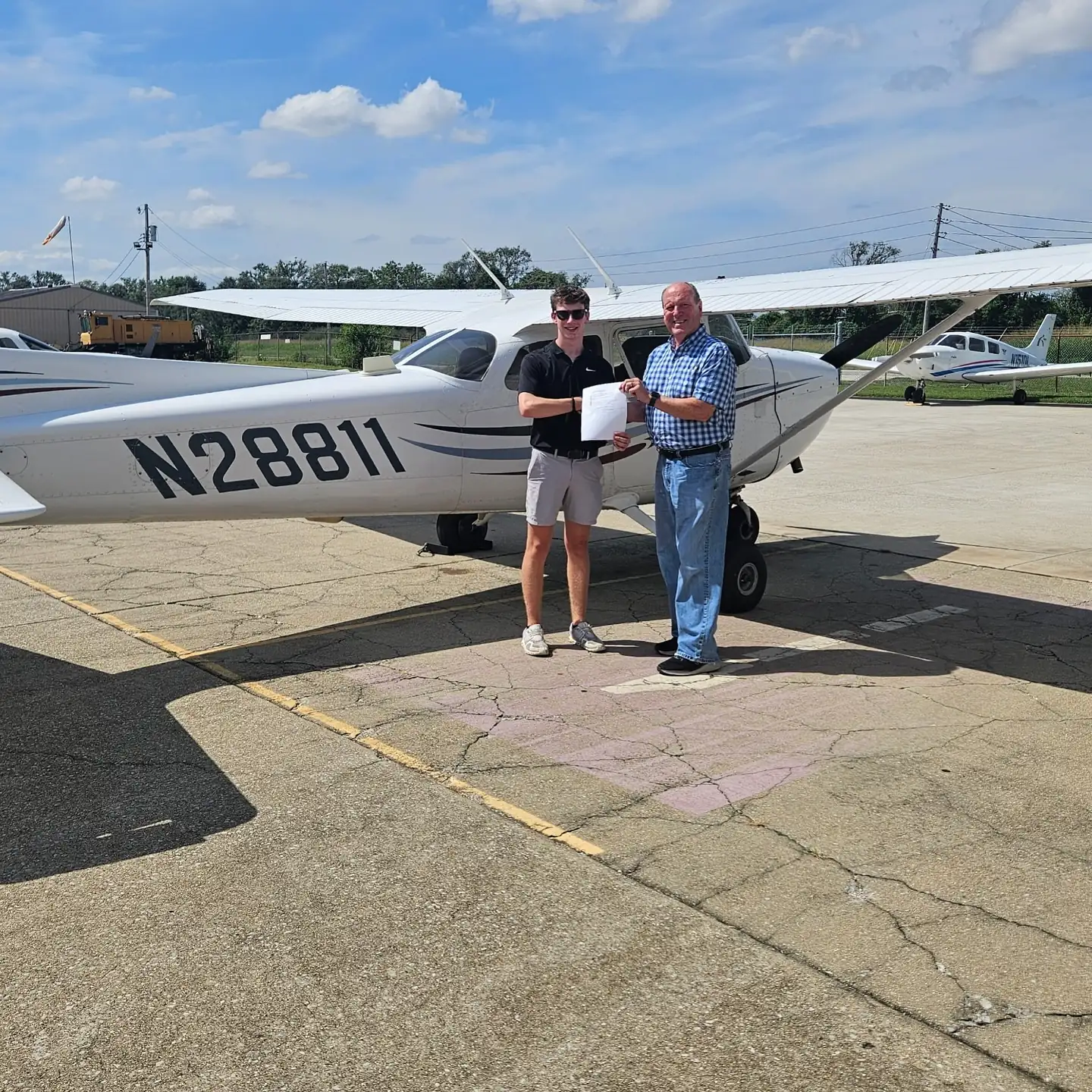
The examiner has never flown with you before test day. When you pass, that same person hands you your temporary certificate.
Your instructor decides when you are ready, not the calendar
At Ideal Aviation, the path to test day runs through your instructor. Before we schedule a checkride, your CFI flies a final review with you, verifies every logbook endorsement, and confirms your knowledge test and application are complete. If a maneuver is still inconsistent, you fly it again before the examiner ever sees it.
In our Part 141 courses, stage checks along the way act as rehearsals. A different instructor evaluates you against the same standards the examiner will use, so by the time you reach the real test you have already been through the experience of flying for someone who is grading you. Students in our Private Pilot program often describe the checkride afterward as one more stage check with a stranger.
What you bring on test day
The applicant is responsible for arriving with the aircraft and the paperwork in order. Your instructor will build this list with you, and checking it the night before is the single easiest way to lower your heart rate in the morning.
- An airworthy aircraft with the equipment required for the test, along with its registration, airworthiness certificate, weight and balance data, and maintenance records showing current inspections.
- Your completed application through IACRA, the FAA’s online application system, with your instructor’s recommendation.
- Your knowledge test report, your medical certificate, your student pilot certificate or existing pilot certificate, and a government photo ID.
- Your logbook with every required endorsement, including the endorsement for the practical test itself.
- A graduation certificate, if you completed a Part 141 course.
- Any flight planning the examiner assigned in advance, usually a cross-country plan with current weather.
Students preparing for later tests, like the Instrument Rating or Commercial Pilot certificate, carry a longer list of experience requirements. Your instructor walks through the applicable requirements line by line before submitting the application.
Inside the oral: a conversation about decisions
The oral portion happens on the ground, usually across a table, and it is less an interrogation than a structured conversation. The examiner asks you to explain regulations, aircraft systems, weather, airspace, performance, and the cross-country plan you prepared. The best answers show how you think, not just what you memorized.
Expect scenario questions. Your destination weather is deteriorating; what do you do? A gauge reads strangely on the run-up; what does it tell you? The Airman Certification Standards test risk management alongside knowledge, so the examiner wants to hear you identify a hazard, weigh it, and make a call. That is the same habit our instructors build during every preflight briefing on the ramp, and it is why we spend so much time on decision-making in ground training.
Inside the flight: the same standards you trained to
The flight portion covers the maneuvers and procedures listed in the ACS for your certificate. For a private pilot test that means takeoffs and landings, slow flight, stalls, ground reference maneuvers, navigation, emergency procedures, and more, each with published tolerances for altitude, heading, and airspeed. You already know the tolerances, because your instructor has been holding you to them.
Talk through what you are doing as you fly. Examiners are evaluating judgment as well as hands, and narrating your decisions shows both. If a landing is not shaping up, go around. A go-around demonstrates exactly the judgment the test is looking for. Instrument candidates can rehearse approaches and procedures in our Redbird simulator until they feel routine, which is where much of the pre-checkride polish happens.
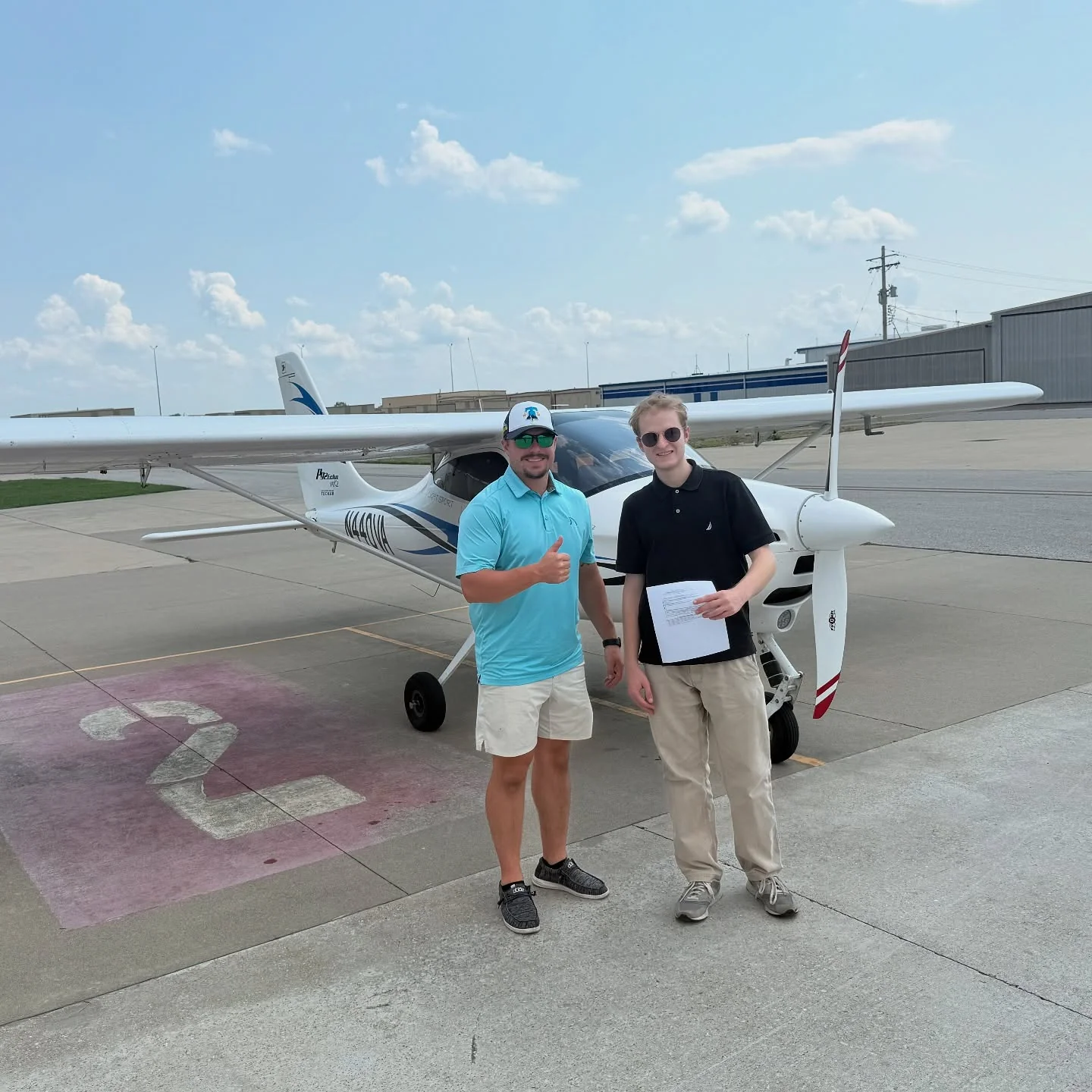
The tolerances on test day are the same ones your instructor held you to all along.
If part of the test does not go your way
Sometimes a maneuver falls outside the standard on the day. When that happens, the examiner can stop the test or, in some cases, let you continue with the remaining tasks so you do not have to repeat them. A disapproval is recoverable. You fly additional training on the specific area with your instructor, receive a new endorsement, and retest.
The students who handle this best treat it as one more training event. It stings, and then it becomes a story you tell the next nervous student in the hangar. What matters is arriving prepared and knowing the path forward if something slips. Our instructors have coached students through both outcomes, and you can read a few of their stories on our student success page.
Scheduling an examiner in St. Louis, and what it costs
Examiner availability varies with the season, the examiner’s own flying schedule, and how many students are testing, so the scheduling conversation should start before you are ready, not the week of. Your instructor helps you pick an examiner who fits your certificate and aircraft, and the examiners who regularly serve students in the St. Louis area are collected on our Local DPEs page. Make sure to confirm current availability and fees directly.
Budget for the day, too. The examiner charges a fee that you pay directly, and you also pay for the aircraft time used during the flight portion. Plan both in your training budget early using our guide to budgeting for flight training. Financing options may be available to qualified applicants, but the examiner fee is one line most students simply set aside as they approach the end of the course.
FAQ
What is a DPE?
A Designated Pilot Examiner is an experienced pilot the FAA has authorized to conduct practical tests and issue pilot certificates and ratings on its behalf. DPEs are private individuals, not FAA employees. Our Local DPEs page explains their role and introduces the examiners serving St. Louis.
How long is a checkride?
Plan for most of a day. The oral portion often runs one to two hours or more, followed by a preflight, the flight portion, and a debrief. Your instructor will give you a realistic estimate for your specific test.
Can I choose my examiner?
Your instructor helps you select an examiner who is authorized for your certificate and aircraft and whose schedule fits your readiness. The list on our Local DPEs page is a starting point for that conversation.
What happens if I fail part of the checkride?
You receive additional training on the area that did not meet the standard, a new endorsement from your instructor, and you retest. It is a common and recoverable outcome.
Do I get my certificate the same day?
When you pass, the examiner issues a temporary airman certificate that day. Your permanent card arrives from the FAA by mail afterward.
Does the simulator help with checkride prep?
For instrument candidates especially, yes. Our Redbird simulator lets you repeat approaches and procedures until they feel routine before you fly them for an examiner.
Plan your checkride with your instructor
The checkride is the day your training becomes a certificate, and the students who walk in calm are the ones who prepared the paperwork, rehearsed the scenarios, and started the examiner conversation early. Talk with your instructor about readiness and examiner availability as you approach the end of your course. If you are planning ahead or comparing programs, contact our team and we will map the path from your current lesson to test day.